
Young Welsh farmers are exploring practical ways to improve livestock productivity, integrate regen practices and understand the wider beef and lamb supply chains to strengthen farm resilience.
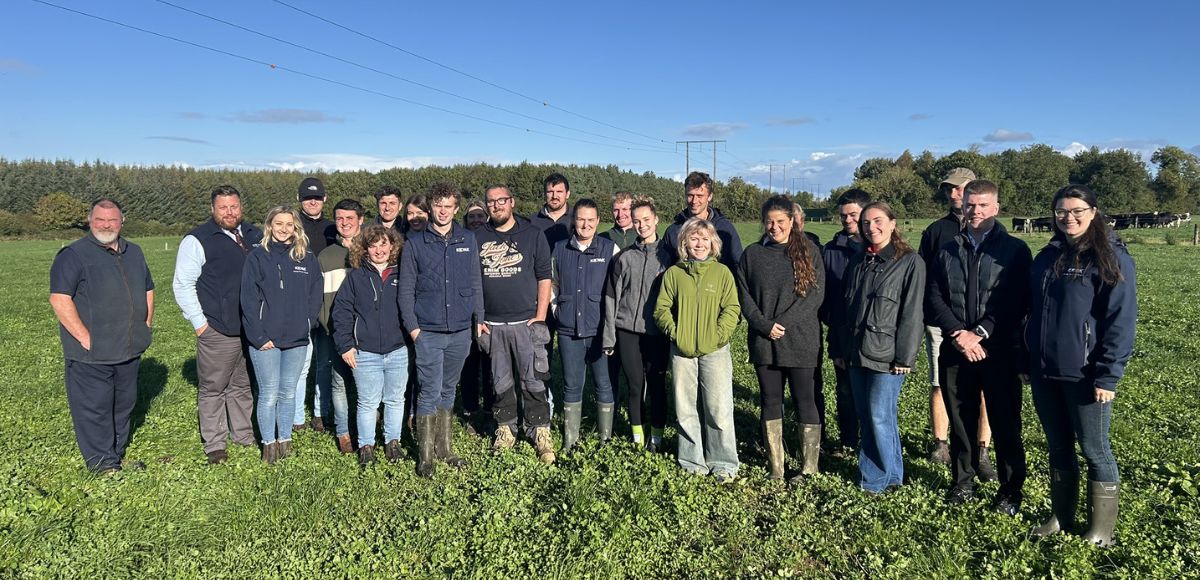
A group of young Welsh livestock farmers have undertaken an inspiring Kepak study tour to Ireland, to experience opportunities for pioneering regenerative farming practices, improving efficiency of their beef production and forge closer collaboration with the meat supply chain.
The participants were part of the UK Kepak Young Farmer Forum, which brings together young farmers to share knowledge and better understand the beef and lamb supply chains.
The programme included visits to Irish farms, the Kepak Farm Research Hub in County Meath and Kepak’s beef processing facility at Ballybay. The group explored regenerative initiatives for grassland and soil management, biodiversity and efficient resource use, along with new technology supporting livestock performance.
For Ffion Havard, from Llwynrhys near Sennybridge in mid-Wales, the study tour gave the chance to compare Irish and Welsh farming systems, and see what elements could help to develop both productivity and regenerative practices on their mixed beef and sheep family farm.
She’s focused on meeting retailer and Kepak sustainability requirements, alongside preparing for the Sustainable Farming Initiative through work on animal health, grassland and soil management, biodiversity and efficient resource use.
The tour also highlighted how decisions made on farm can influence processing efficiency, product quality and market requirements.
PRACTICAL IDEAS FOR THE FARM
At the Kepak Farm Research Hub, the group saw regenerative practices in action, including reduced tillage, cover crops designed to retain nutrients and protect soil, and measures to support biodiversity.
Frances Thomas, Kepak Sustainability Officer in the UK, said: “The tour gave the group a valuable insight into the journey from farm to consumer. Participants saw practical ideas and innovations that they can now consider in the context of their own farms.
“As farming businesses evolve, relatively small changes can support better productivity and sustainability. Hearing directly from farmers and seeing these practices in operation made the experience particularly valuable.”
CONNECTING THE SUPPLY CHAIN
The visit to Ballybay helped participants understand how livestock production, processing and market expectations are connected, how consistency, specification and on-farm decisions can affect outcomes further along the supply chain.
Discussions sought opportunities to promote regenerative farming through the supply chain and better understand customer implications. Young farmers had the chance to present and share experiences of regenerative and sustainable farming practices already implemented on their farms.
Tom Finn, Kepak UK Chief Executive, said: “Investing in the next generation is essential. Their ambition and fresh thinking will help shape the future of livestock farming.
“Through the Kepak Young Farmer Forum, we want to give young farmers opportunities to exchange knowledge, understand the wider supply chain and build viable, resilient businesses for the future.”